
In these letter presentation style of sir Michael A. Bengawayan on the first city land summit of Baguio, he re-iterated how a simple native pine tree in the Cordilleras have a major impact on us if we turned a blind eye. Focusing only on development and economic profit of the city.
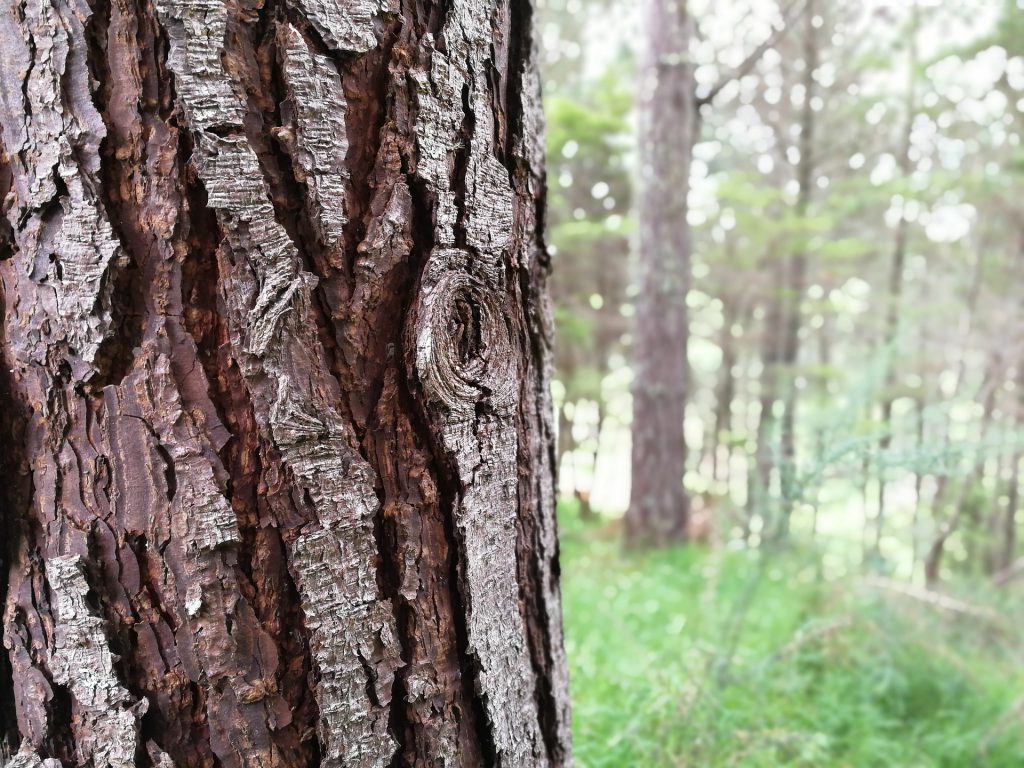
On this presentation, he delves on why ecological balance is important in the city of Baguio. It is a simple but an eye-opening on the consequences that our beloved city of pines will have to endure if we don’t act and care right now.
WE NEED TO LIVE ECO-SPIRITUALLY
MICHAEL A. BENGWAYAN, Ph. D. Environmental Resource
Management, University College Dublin;
Cordillera Ecological Center (PINE TREE),
Dear colleagues,
In this lovely season of Sept., I am delighted to meet you all in this
Baguio First Land Summit.
Thank you to Congressman Mark Go for inviting me. When we talk of land, we refer to the soil, water, rocks, biodiversity both flora and fauna and even microorganisms unseen by the naked
eye.
Over the past years, the city of Baguio has grown in terms of population, number and different business establishments, residential areas and other economic activities. But these came different and alarming urban sprawl negative consequences.
As a result of poor comprehensive urban planning wanting of vision and foresight, landscapes have been destroyed, thousands of trees cut, particularly in Camp John Hay, wild but beautiful plants pushed to extinction (eg. Lady’s slipper), sources of water destroyed, garbage increased, and air poisoned and polluted in the city’s 67 sq. km area.
We are paying the price of our economic success with dangerous irreversible ecological consequences for the yet unborn population. We need to counter these with pro-active no-nonsense efforts with urgency clothed with vitality and momentum of cooperation. It calls for a plan of action, pushed by a vision that champions respect for land and biodiversity and consultation, in pursuit of Baguio’s economic and sustainable ecological development.
We must create a new Working Spirit, ascending from outdated concepts such as sacrifice of ecology for economy, clash of opinions, and zero-sum mentality, to a new page in of ecological spirituality and respect for creation.
Colleagues, Earth is our only home, so is Baguio. How will the future generation think of us if we allow the destruction of our city? That we are greedy and selfish? When you look down from the peak of Mount Santo Thomas and Quirino Hill, you will see how much we have destroyed the beautiful land.
At a time when the country is undergoing major developments, transformation and adjustment, we
must aim high and look far, and keep pace with the underlying trend of ecological sustainability as we push for more progress of human civilization.
While money and power politics are often our enemy to a safe and sustainable city, the growing call for a more just and ecological community order must be heeded.
Dear colleagues,
Baguio faces opportunities and challenges. The road ahead, bumpy as it may be, will lead to a promising future if we stay committed to working under a vision of Eco-spirituality, the sacred regard for land and all creation.
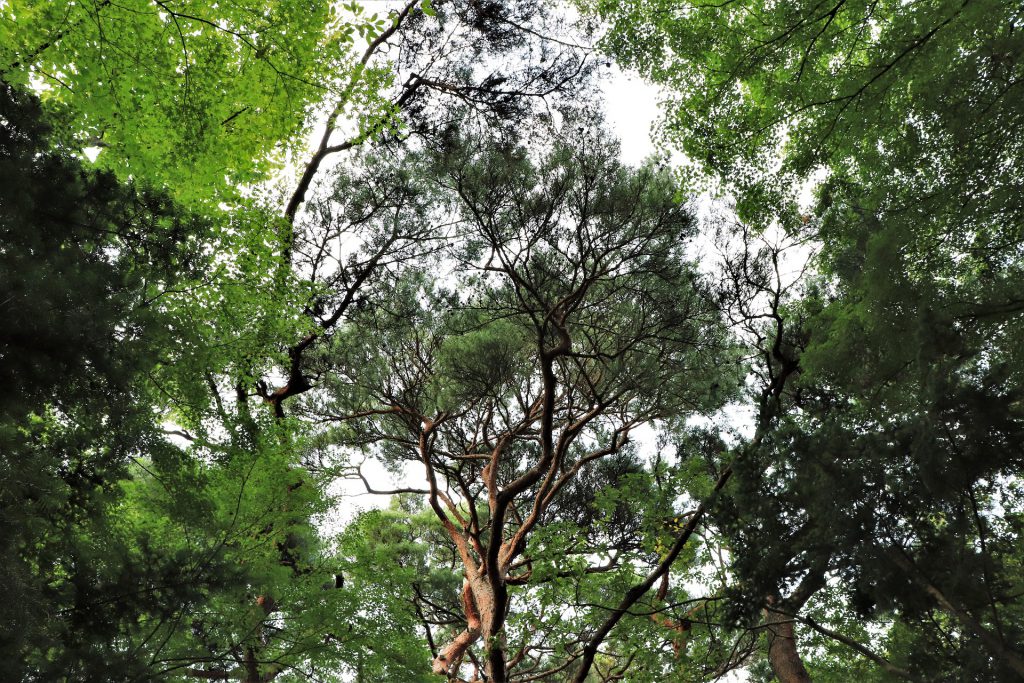
Allow me to talk lengthily about our pine trees. Pinus insularis is our dominant forest cover, they are “Baguio’s lungs”. Pine trees are named so because they contain e-pinene chemical, a type of arkane or
hydrocarbon in their pith. One mature pine tree, ten years and above, releases 45 lbs of oxygen a year.
At least four trees can supply the oxygen requirement of one human each year. As pine trees release oxygen, they absorb CO2, a dangerous greenhouse gas. Each mature pine tree absorbs 45 lbs of CO2, following physics’ law of displacement, “what element is lost is equally replaced by another element”.
The oxygen released by the millions of pine trees affect air by reducing temperature, remove smog and air pollutants, CO2, methane, sulphur and nitrous oxides thereby regulating microclimatic effects
like cooling.
Pine trees help provide water, absorbing as much as 150 liters per mature tree each year which they release slowly to recharge brooks, springs, rivers and ponds. Three of the nation’s biggest mega-dams, San Roque, Ambuklao and Binga generating a combined 1,200 megawatts of hydroelectric power—get their water from pine and mossy forests of Benguet and Mountain Province.
The pine trees prevent soil erosion and landslides in the region, serving as the main soil cover thereby protecting soil loss. The Cordillera region losses some 100,000 tons of topsoil every year, without the pine trees soil loss would be worse affecting adversely agriculture, settlements, properties and lives.
Our pine trees lower temperature. When Baguio had more pine trees, the city was cooler; it deserved to be called the “City of Pines”. Today, the city is not only warm, congested and dirty but also dubbed by World Bank as having one of the cities in the world with the “dirtiest air” as thousands of trees were allowed by the city government to be
cut to give way to commercial and residential buildings, roads, tourism and hotels.
Clumps of pine trees and all trees for that matter reduce mid-day temperature from a minimum of 0.2 degrees C to 1.3 degrees C some 1.5 meters to 2.4 meters above ground. Below individual and small fragments of pine trees over grass, midday air temperatures can be reduced to as low as 0.7C to 1.3C degrees cooler than in any open area.
When pine trees respire, they emit oxygen which do not only reduce air temperature, but also absorb radiation and store heat. They also reduce relative humidity, turbulence, and surface albedo of concrete. These changes in local meteorology alter pollution concentrations in urban areas.
The city’s pine trees remove air pollutants. Even though pine trees leaves are needle-type, they function as
normally as a broadleaf. The needles through their stomata, remove deadly gaseous air pollution primarily by uptake. Once inside the leaf, gases diffuse into intercellular spaces and may be absorbed by water films to form acids or react with inner-leaf surfaces. The trees also remove pollution by intercepting airborne
particles. Most particles like CO2 are absorbed into the tree, and eventually stored in the soil by the roots.
Some particles that are intercepted are retained on the plant surface. These are resuspended to the atmosphere, washed off by rain, or dropped to the ground with leaf and twig falls. Consequently, vegetation is only a temporary retention site for many atmospheric particles.
Our pine trees reduce Urban Island Phenomenon and temperature on buildings. Urban Island phenomenon is the heat transferred from cities via highway and roads to outlying communities. Pine tree reduce this, as well as lessen building energy use by lowering temperatures and shading buildings during the summer, and blocking winds during rainy season. When building energy use is lowered, pollutant emissions from power plants are also lowered.
The cumulative and interactive effects of trees on meteorology, pollution removal, and power plant emissions determine the overall impact of trees on air pollution.
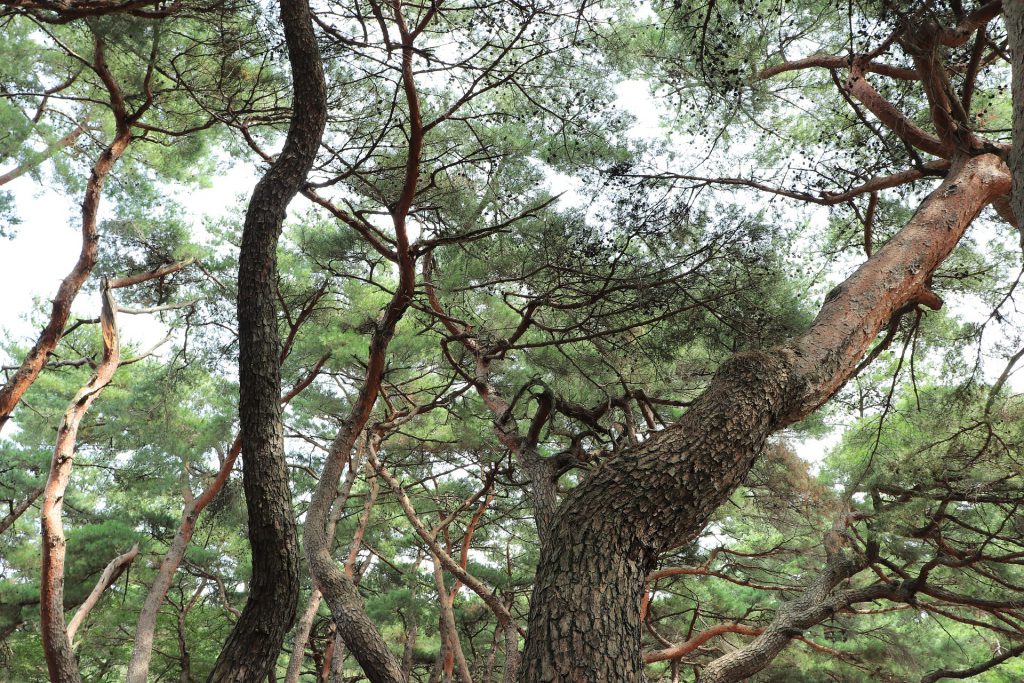
It is God’s design that trees give us oxygen, absorb GHG, give us water, cleanse the air, prevent erosion, give us shade, and andgive us unlimited benefits. But we are defiling God’s design. We are only concerned on exploiting them. Trees mean life. They and all creation must be treated as sacred.
Dear colleagues,
Baguio faces opportunities and challenges. The road ahead, bumpy as
it may be, will lead to a promising future if we stay committed to
working under a vision of Eco-spirituality.
1.)Respect land, water, soil, trees, plants birds, and all creation
and treat them as sacred.
2,)I call for a 20-year moratorium on tree cutting on all
government and private lands, STOPPING DENR and the city
government from issuing tree cutting permits.
3.)–Strictly enforce RA 3571. AN ACT TO PROHIBIT THE
CUTTING, DESTROYING OR INJURING OF PLANTED OR
GROWING TREES, FLOWERING PLANTS AND SHRUBS
OR PLANTS OF SCENIC VALUE ALONG PUBLIC ROADS,
IN PLAZAS, PARKS, SCHOOL PREMISES OR IN ANY
OTHER PUBLIC GROUND.
4.) Reforest/replant with native trees and plants
5.) Identify private open spaces and coordinate with owners to
have these planted with trees (fruit-bearing or non-fruit
bearing), shrubs or bushes
6.) Require all barangays to have a community flower/ vegetable
garden with composting area and rainwater impounding system
7.) Make mandatory waste segregation, and zero waste
approaches to all households and business establishments.
8.) Require those with residents with open spaces to have
composting areas for biodegradable wastes.
9.) Local tax incentives for those who did not cut the old trees
in their properties AND those who have trees 10 years and
older.10.) No more flattening of hills and mountains that give way
to structures and roads (to avoid erosion and landslides);
11.) national government to stop selling and leasing pubic
land to private individuals and corporations;
12.) rain forestation (refo using native species) as
overarching objective in watershed protection;
13.) CBAO and Barangay LGU to ensure enforcement of
regulations over expansion of settlements (Baguio cannot be
in-migration area forever).
14.) Last, we must lessen our need and temper our greed
Dear colleagues,
Living through the eco- spiritual way is our only safe path if we want Baguio our shared home. We should, guided by it, respecting the land and all of God’s creation to enable us closely to build a community with a shared future, move toward a new type of cooperative relations, and build an open, inclusive, clean and green beautiful Baguio that
enjoys lasting peace, security, and common prosperity.
Thank you.
MICHAEL A. BENGWAYAN, Ph. D. Environmental Resource
Management, University College Dublin; Worker, Cordillera
Ecological Center (PINE TREE),
TALK, BAGUIO FIRST LAND SUMMIT: Sept. 13, 2019,
BENECO Hall, Baguio City, Philippine